

Evolving
Our Business
2025 was a year of extraordinary execution across our portfolio, with clinical, regulatory, and commercial achievements that are making a profound impact on patients’ lives. We continued to drive double-digit growth for our first marketed product, ARIKAYCE, and reported positive topline data from our Phase 2b study of TPIP in patients with PAH, setting the stage for a robust Phase 3 program across multiple potential indications.
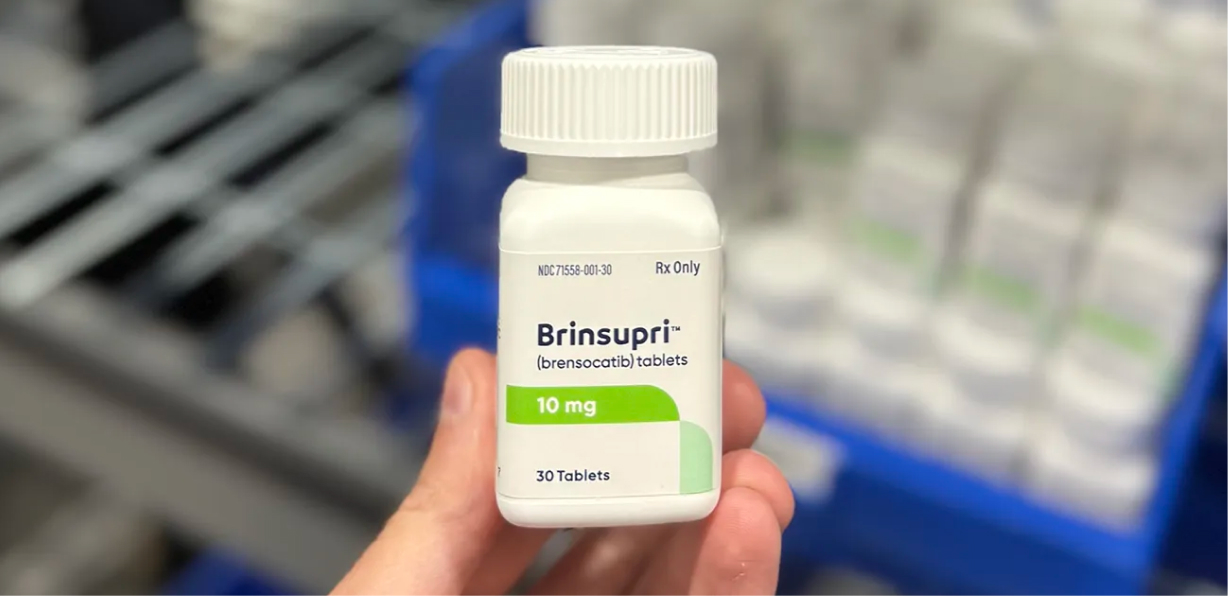
Our proudest moment came in August with the U.S. FDA approval of BRINSUPRI, marking the first ever approval for a treatment indicated for patients with NCFB, followed shortly thereafter by approval from the European Commission.
Beyond these notable achievements, Insmed is advancing a robust portfolio and pipeline aligned to our three therapeutic areas, with numerous catalysts on the horizon that have the potential to significantly expand the number of patients we can reach with our therapies. Our commercial and later-stage clinical efforts are supplemented by our early-stage research engine, which is designed to produce an average of one to two IND filings per year.
Read on to learn more about what Insmed achieved in 2025 and how we plan to go further in 2026.
Our three therapeutic areas have one shared goal: to deliver first- and best-in-class medicines to patients in need.
Respiratory
- BRINSUPRI®
- ARIKAYCE®
- TPIP: PAH & PH-ILD
- TPIP: PPF & IPF
- INS1148 (SCF248 Monoclonal Antibody): ILD & Moderate to Severe Asthma
- DPP1: Other
Immunology & Inflammation
- Brensocatib: HS
- INS1033 (DPP1): Rheumatoid Arthritis (RA) & Irritable Bowel Disease (IBD)
- Next-Gen Uricase: Gout
- IgG Protease
- INS1148 (SCF248 Monoclonal Antibody): Other
- Novel MoA
Neuro & Other Rare
- NS1201 (GTx): DMD
- INS1202 (GTx): ALS
- INS1203 (GTx): Stargardt Disease
- Synthetic Rescue (Antisense Oligonucleotide): Ataxia Telangiectasia
- Synthetic Rescue (Antisense Oligonucleotide): Ataxia with Oculomotor Apraxia Type 1
- Other Rare Diseases
Research & Business Development
Respiratory
BRINSUPRI
First and only treatment indicated for patients with bronchiectasis
On August 12, 2025, Insmed celebrated a transformative moment for the bronchiectasis community with the FDA approval of BRINSUPRI for patients ages 12 and older with NCFB. With this milestone, we were proud to deliver a long-awaited first-in-class, first-in-disease therapy. This achievement also marked the second FDA approval for Insmed, significantly expanding our potential to serve patients in need.
We moved rapidly to launch BRINSUPRI in the U.S. immediately after approval, with product reaching initial patients by early September. The U.S. launch of BRINSUPRI has been very strong, with 2025 revenues of $172.7 million in just a few months of availability. This early strength reflects the significant demand from a patient population that previously had to rely on therapies that did not address one of the key drivers of the disease.
Insmed also filed for approval of brensocatib in the UK, EU, and Japan in 2025. In November 2025, the European Commission granted approval of BRINSUPRI for the treatment of NCFB in patients 12 years of age and older with two or more exacerbations in the prior 12 months. In February 2026, approval was granted in the UK for the same indication.
We anticipate a regulatory decision for BRINSUPRI in Japan in 2026.
ARIKAYCE
Continuing to drive double-digit growth
Seven years post-launch, our first commercial product, ARIKAYCE, continues to deliver double-digit growth year over year, underscoring the significant need for this therapy. Full-year ARIKAYCE revenues in 2025 were $433.8 million, exceeding the upper end of our guidance range. ARIKAYCE is currently approved in the U.S., Europe, and Japan as the first and only therapy for adults with refractory MAC lung disease with limited treatment options, in combination with their multidrug regimen.
Throughout 2025, Insmed continued to advance the Phase 3 ENCORE study of ARIKAYCE in diagnosed patients with a new occurrence of MAC lung infection who have not received antibiotics.


2025
Financial Highlights
Global annual net product revenues (in millions)
| 2023 | $305.2 |
|---|---|
| 2024 | $363.7 |
| 2025 | $606.4 |
Cash, cash equivalents, and marketable securities (in millions)
| 2023 | $780.4 |
|---|---|
| 2024 | $1,433.8 |
| 2025 | $1,430.0 |
In 2026, we anticipate BRINSUPRI revenues to be at least $1 billion and ARIKAYCE revenues to be between $450 million and $470 million.
TPIP
Key win in 2025 lays the foundation for robust pivotal program
2025 was a critical year for TPIP, with important efficacy data setting the stage for a robust clinical trial program across multiple indications. In June, Insmed announced positive topline results from our randomized, double-blind, placebo-controlled Phase 2b study of TPIP in patients with PAH. The study met its primary endpoint, with a 35% placebo-adjusted reduction in pulmonary vascular resistance at Week 16, as well as all secondary efficacy endpoints. These results showed the potential of TPIP’s therapeutic effect as a once-daily therapy based on efficacy measures taken approximately 24 hours after therapy was administered. Importantly, TPIP was well tolerated in the study.
These compelling data provided the foundation to pursue pivotal programs in several potential indications. In 2025, we initiated a Phase 3 study of TPIP in patients with PH-ILD based on the strength of prior Phase 1/2 data in PH-ILD as well as the Phase 2b study in PAH. We plan to initiate a Phase 3 study in patients with PAH in the first half of 2026, followed by Phase 3 programs in PPF and IPF in the second half of the year.
Further expanding our respiratory portfolio
In December 2025, Insmed acquired INS1148, a monoclonal antibody targeting a specific isoform of Stem Cell Factor called Stem Cell Factor 248 (SCF248). We plan to advance Phase 2 development programs for INS1148 in ILD and moderate to severe asthma.
Immunology & Inflammation


Brensocatib
Exploring additional inflammatory diseases
Beyond bronchiectasis, Insmed is evaluating brensocatib for its potential role in HS, another neutrophil-mediated disease. In 2025, we completed enrollment in the Phase 2b CEDAR study of brensocatib in patients with HS. We expect to report topline results from this study in the second quarter of 2026. Also in 2025, we reported that the Phase 2b BiRCh study of brensocatib in patients with chronic rhinosinusitis without nasal polyps did not meet its primary or secondary efficacy endpoints and that this program has been discontinued.
INS1033
Advancing the next generation of DPP1 inhibition
Following the success of the clinical trial program for brensocatib in bronchiectasis, Insmed is working to design next-generation dipeptidyl peptidase 1 (DPP1) inhibitors with the potential to treat a range of neutrophil-mediated diseases. Our second such candidate, INS1033, is advancing toward the clinic in RA and IBD, with an IND filing expected in 2026.
Neuro & Other Rare
Gene Therapy
Bringing the first product candidate into the clinic
In 2025, Insmed made important clinical progress for our gene therapy candidates, which we are developing to address some of the most devastating and difficult-to-treat rare diseases.
We initiated the Phase 1 ASCEND study of INS1201, marking the first delivery of an Insmed gene therapy to a patient. INS1201 is an investigational, intrathecally delivered micro-dystrophin AAV9 gene therapy being developed for the treatment of patients with DMD. We are continuing to enroll patients in this study.
We also received IND clearance from the FDA for INS1202, an investigational, intrathecally delivered AAV9 short hairpin RNA construct targeting the human superoxide dismutase type 1 (SOD1) gene. Insmed is developing INS1202 as a potential treatment for patients with ALS who carry SOD1 mutations as well as those with sporadic ALS. In early 2026, we dosed the first patient in the Phase 1 ARMOR study of INS1202 in ALS.
Our third gene therapy candidate, INS1203, targeting Stargardt disease, is currently advancing toward the clinic.

Our Research Facilities
Where potential breakthroughs take shape
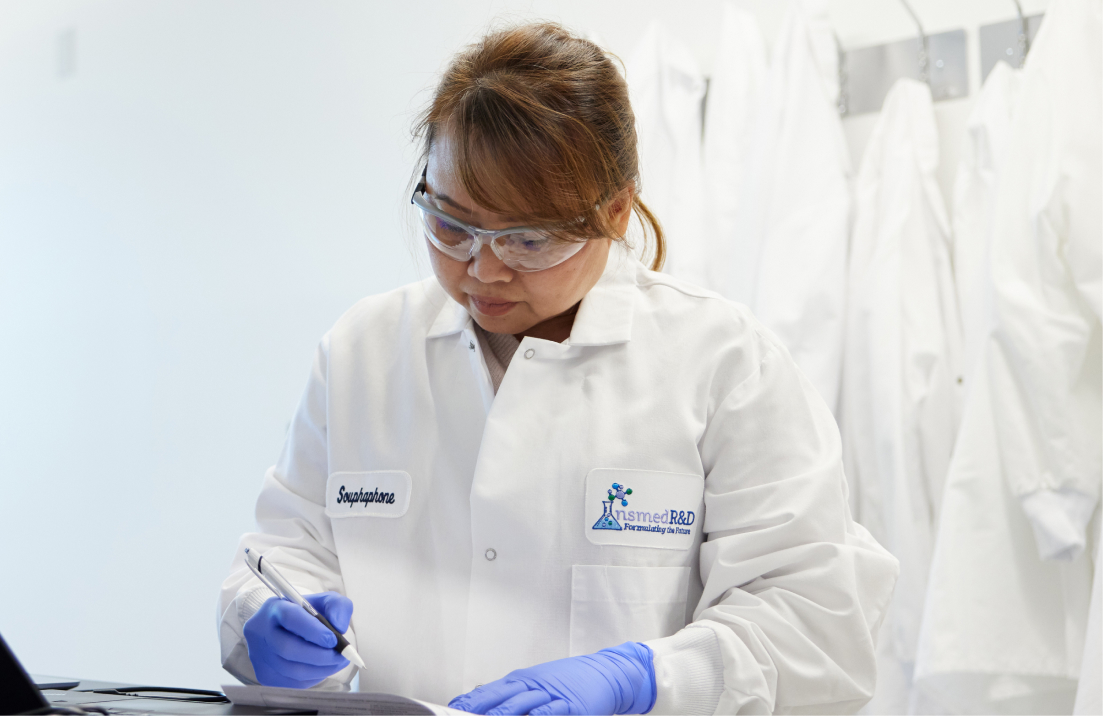
Insmed’s four research laboratories, located in New Jersey, New Hampshire, San Diego, and Cambridge, UK, are the driving force behind our research efforts, collaborating seamlessly across geographies. Individual teams work closely within their own labs, then come together regularly to share insights, cross-pollinate ideas, and refine approaches through new perspectives. A central Research Council evaluates the science and works together to proactively plan our IND pipeline.
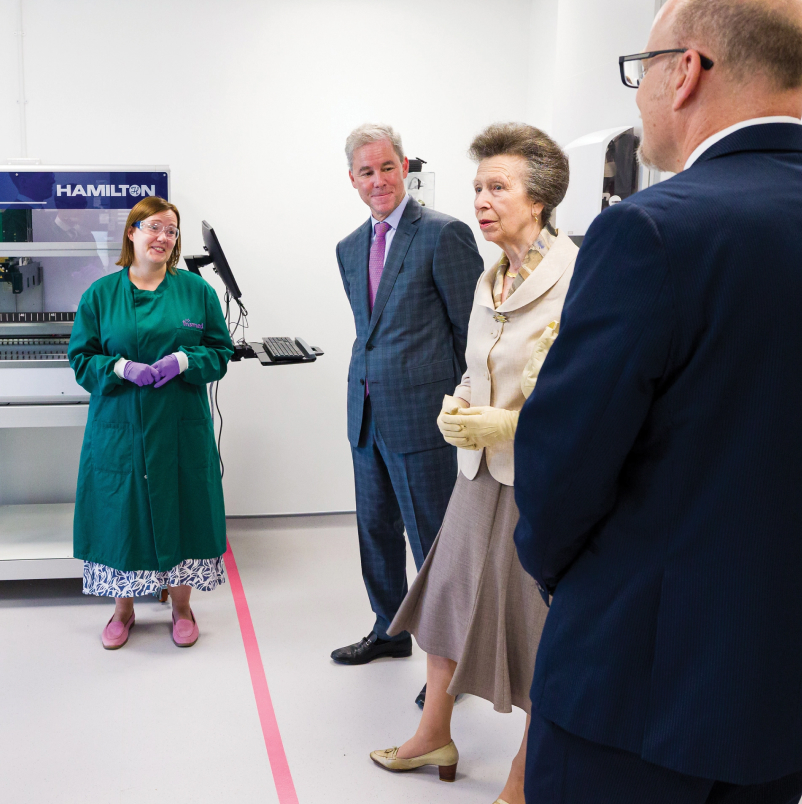
In July of 2025, Insmed celebrated the opening of our new research and development facility in Cambridge, a state-of-the-art, 17,000-square-foot facility that serves as the home base for our pioneering synthetic rescue platform. Insmed’s $10 million investment in the new Cambridge facility enables close collaboration across cell biology, synthetic chemistry, and informatics capabilities all under one roof. The opening was attended by Her Royal Highness The Princess Royal, whose presence highlighted the significance of Insmed’s work to the broader UK biopharma ecosystem.
AI
Amplifying Insmed’s possibilities
Throughout 2025, Insmed continued to deploy AI across key areas of our business with the goal of enabling efficiencies that help us deliver therapies to patients sooner. Our AI initiatives are guided by a multi-tiered governance framework, including an AI Council for executive oversight and an AI Governance Committee tasked with managing risk and compliance standards.
In early 2025 we launched InQuiry, Insmed’s proprietary generative AI assistant, which leverages our unique internal data to summarize documents, create content, produce meeting recaps, and more. InQuiry fully integrates across Insmed, securely maintaining data while helping to improve critical workflows. Teams have realized productivity gains around such tasks as creating job descriptions, drafting development plans, and building templates.
We also are leveraging AI to optimize business-critical, labor-intensive tasks such as translating documents, producing HEOR dossiers, and determining next best actions for case managers on our Patient Services team, and are exploring how AI may be used to write first drafts of IND applications and assess business development opportunities.
In 2025, we began to drive widespread adoption of our AI program internally, with many employees participating in AI workshops. Throughout 2026, our focus is on expanding beyond individual productivity gains to enterprise-wide transformation. As part of this effort, we are developing comprehensive AI learning curricula and establishing an AI Ambassadors network of leaders who not only use AI tools to improve team workflows but also model transformative approaches and encourage bold experimentation across their functions.
BRINSUPRI® (brensocatib) U.S. INDICATION AND IMPORTANT SAFETY INFORMATION
Indication in the U.S.
BRINSUPRI is indicated for the treatment of non-cystic fibrosis bronchiectasis (NCFB) in adult and pediatric patients 12 years of age and older.
Important Safety Information in the U.S.
WARNINGS AND PRECAUTIONS
Dermatologic Adverse Reactions
Treatment with BRINSUPRI is associated with an increase in dermatologic adverse reactions, including rash, dry skin, and hyperkeratosis. Monitor patients for development of new rashes or skin conditions and refer patients to a dermatologist for evaluation of new dermatologic findings.
Gingival and Periodontal Adverse Reactions
Treatment with BRINSUPRI is associated with an increase in gingival and periodontal adverse reactions. Refer patients to dental care services for regular dental checkups while taking BRINSUPRI. Advise patients to perform routine dental hygiene.
Live Attenuated Vaccines
It is unknown whether administration of live attenuated vaccines during BRINSUPRI treatment will affect the safety or effectiveness of these vaccines. The use of live attenuated vaccines should be avoided in patients receiving BRINSUPRI.
ADVERSE REACTIONS
The most common adverse reactions ≥2% in the ASPEN trial included upper respiratory tract infection, headache, rash, dry skin, hyperkeratosis, and hypertension. The safety profile for adult patients with NCFB in WILLOW was generally similar to ASPEN, except for a higher incidence of gingival and periodontal adverse reactions.
Less Common Adverse Reactions
Liver Function Test Elevations
In ASPEN, there was an increase from baseline in average ALT, AST, and alkaline phosphatase levels at all time points from Week 4 through Week 56 in both BRINSUPRI 10 mg and 25 mg arms compared to placebo. The incidence of ALT >3X upper limit of normal (ULN) was 0%, 1.2%, and 0.9%; the incidence of AST >3X ULN was 0.2%, 0.3%, and 0.5%; and the incidence of alkaline phosphatase >1.5X ULN was 2.5%, 4.1%, and 4.0% in patients treated with placebo and BRINSUPRI 10 mg and 25 mg, respectively.
Skin Cancers
In ASPEN, the incidence of skin cancers among patients treated with BRINSUPRI 10 mg and 25 mg was 0.5% and 1.9%, respectively, compared to 1.1% in placebo-treated patients.
Alopecia
In ASPEN, the incidence of alopecia among patients treated with BRINSUPRI 10 mg and 25 mg was 1.5% and 1.6% respectively, compared to 0.4% in placebo-treated patients.
USE IN SPECIFIC POPULATIONS
Pregnancy: There are no clinical data on the use of BRINSUPRI in pregnant women.
Lactation: There is no information regarding the presence of BRINSUPRI and/or its metabolite(s) in human milk, the effects on the breastfed infant, or the effects on milk production. The developmental and health benefits of breastfeeding should be considered along with the mother’s clinical need for BRINSUPRI and any potential adverse effects on the breastfed child from BRINSUPRI or from the underlying maternal condition.
Pediatric use: The safety and effectiveness of BRINSUPRI for the treatment of NCFB have been established in pediatric patients aged 12 years and older. Common adverse reactions in pediatric patients aged 12 years and older enrolled in ASPEN were consistent with those in adults. The safety and effectiveness of BRINSUPRI have not been established in pediatric patients younger than 12 years of age.
IMPORTANT SAFETY INFORMATION AND BOXED WARNING FOR ARIKAYCE IN THE U.S.
WARNING: RISK OF INCREASED RESPIRATORY ADVERSE REACTIONS
ARIKAYCE has been associated with an increased risk of respiratory adverse reactions, including hypersensitivity pneumonitis, hemoptysis, bronchospasm, and exacerbation of underlying pulmonary disease that have led to hospitalizations in some cases.
Hypersensitivity Pneumonitis has been reported with the use of ARIKAYCE in the clinical trials. Hypersensitivity pneumonitis (reported as allergic alveolitis, pneumonitis, interstitial lung disease, allergic reaction to ARIKAYCE) was reported at a higher frequency in patients treated with ARIKAYCE plus background regimen (3.1%) compared to patients treated with a background regimen alone (0%). Most patients with hypersensitivity pneumonitis discontinued treatment with ARIKAYCE and received treatment with corticosteroids. If hypersensitivity pneumonitis occurs, discontinue ARIKAYCE and manage patients as medically appropriate.
Hemoptysis has been reported with the use of ARIKAYCE in the clinical trials. Hemoptysis was reported at a higher frequency in patients treated with ARIKAYCE plus background regimen (17.9%) compared to patients treated with a background regimen alone (12.5%). If hemoptysis occurs, manage patients as medically appropriate.
Bronchospasm has been reported with the use of ARIKAYCE in the clinical trials. Bronchospasm (reported as asthma, bronchial hyperreactivity, bronchospasm, dyspnea, dyspnea exertional, prolonged expiration, throat tightness, wheezing) was reported at a higher frequency in patients treated with ARIKAYCE plus background regimen (28.7%) compared to patients treated with a background regimen alone (10.7%). If bronchospasm occurs during the use of ARIKAYCE, treat patients as medically appropriate.
Exacerbations of underlying pulmonary disease has been reported with the use of ARIKAYCE in the clinical trials. Exacerbations of underlying pulmonary disease (reported as chronic obstructive pulmonary disease (COPD), infective exacerbation of COPD, infective exacerbation of bronchiectasis) have been reported at a higher frequency in patients treated with ARIKAYCE plus background regimen (14.8%) compared to patients treated with background regimen alone (9.8%). If exacerbations of underlying pulmonary disease occur during the use of ARIKAYCE, treat patients as medically appropriate.
Anaphylaxis and Hypersensitivity Reactions: Serious and potentially life-threatening hypersensitivity reactions, including anaphylaxis, have been reported in patients taking ARIKAYCE. Signs and symptoms include acute onset of skin and mucosal tissue hypersensitivity reactions (hives, itching, flushing, swollen lips/tongue/uvula), respiratory difficulty (shortness of breath, wheezing, stridor, cough), gastrointestinal symptoms (nausea, vomiting, diarrhea, crampy abdominal pain), and cardiovascular signs and symptoms of anaphylaxis (tachycardia, low blood pressure, syncope, incontinence, dizziness). Before therapy with ARIKAYCE is instituted, evaluate for previous hypersensitivity reactions to aminoglycosides. If anaphylaxis or a hypersensitivity reaction occurs, discontinue ARIKAYCE and institute appropriate supportive measures.
Ototoxicity has been reported with the use of ARIKAYCE in the clinical trials. Ototoxicity (including deafness, dizziness, presyncope, tinnitus, and vertigo) were reported with a higher frequency in patients treated with ARIKAYCE plus background regimen (17%) compared to patients treated with background regimen alone (9.8%). This was primarily driven by tinnitus (7.6% in ARIKAYCE plus background regimen vs 0.9% in the background regimen alone arm) and dizziness (6.3% in ARIKAYCE plus background regimen vs 2.7% in the background regimen alone arm). Closely monitor patients with known or suspected auditory or vestibular dysfunction during treatment with ARIKAYCE. If ototoxicity occurs, manage patients as medically appropriate, including potentially discontinuing ARIKAYCE.
Nephrotoxicity was observed during the clinical trials of ARIKAYCE in patients with MAC lung disease but not at a higher frequency than background regimen alone. Nephrotoxicity has been associated with the aminoglycosides. Close monitoring of patients with known or suspected renal dysfunction may be needed when prescribing ARIKAYCE.
Neuromuscular Blockade: Patients with neuromuscular disorders were not enrolled in ARIKAYCE clinical trials. Patients with known or suspected neuromuscular disorders, such as myasthenia gravis, should be closely monitored since aminoglycosides may aggravate muscle weakness by blocking the release of acetylcholine at neuromuscular junctions.
Embryo-Fetal Toxicity: Aminoglycosides can cause fetal harm when administered to a pregnant woman. Aminoglycosides, including ARIKAYCE, may be associated with total, irreversible, bilateral congenital deafness in pediatric patients exposed in utero. Patients who use ARIKAYCE during pregnancy, or become pregnant while taking ARIKAYCE should be apprised of the potential hazard to the fetus.
Contraindications: ARIKAYCE is contraindicated in patients with known hypersensitivity to any aminoglycoside.
Most Common Adverse Reactions: The most common adverse reactions in Trial 1 at an incidence ≥5% for patients using ARIKAYCE plus background regimen compared to patients treated with background regimen alone were dysphonia (47% vs 1%), cough (39% vs 17%), bronchospasm (29% vs 11%), hemoptysis (18% vs 13%), ototoxicity (17% vs 10%), upper airway irritation (17% vs 2%), musculoskeletal pain (17% vs 8%), fatigue and asthenia (16% vs 10%), exacerbation of underlying pulmonary disease (15% vs 10%), diarrhea (13% vs 5%), nausea (12% vs 4%), pneumonia (10% vs 8%), headache (10% vs 5%), pyrexia (7% vs 5%), vomiting (7% vs 4%), rash (6% vs 2%), decreased weight (6% vs 1%), change in sputum (5% vs 1%), and chest discomfort (5% vs 3%).
Drug Interactions: Avoid concomitant use of ARIKAYCE with medications associated with neurotoxicity, nephrotoxicity, and ototoxicity. Some diuretics can enhance aminoglycoside toxicity by altering aminoglycoside concentrations in serum and tissue. Avoid concomitant use of ARIKAYCE with ethacrynic acid, furosemide, urea, or intravenous mannitol.
Overdosage: Adverse reactions specifically associated with overdose of ARIKAYCE have not been identified. Acute toxicity should be treated with immediate withdrawal of ARIKAYCE, and baseline tests of renal function should be undertaken. Hemodialysis may be helpful in removing amikacin from the body. In all cases of suspected overdosage, physicians should contact the Regional Poison Control Center for information about effective treatment.
U.S. INDICATION
LIMITED POPULATION: ARIKAYCE® is indicated in adults, who have limited or no alternative treatment options, for the treatment of Mycobacterium avium complex (MAC) lung disease as part of a combination antibacterial drug regimen in patients who do not achieve negative sputum cultures after a minimum of 6 consecutive months of a multidrug background regimen therapy. As only limited clinical safety and effectiveness data for ARIKAYCE are currently available, reserve ARIKAYCE for use in adults who have limited or no alternative treatment options. This drug is indicated for use in a limited and specific population of patients.
This indication is approved under accelerated approval based on achieving sputum culture conversion (defined as 3 consecutive negative monthly sputum cultures) by Month 6. Clinical benefit has not yet been established. Continued approval for this indication may be contingent upon verification and description of clinical benefit in confirmatory trials.
Limitation of Use:
ARIKAYCE has only been studied in patients with refractory MAC lung disease defined as patients who did not achieve negative sputum cultures after a minimum of 6 consecutive months of a multidrug background regimen therapy. The use of ARIKAYCE is not recommended for patients with non-refractory MAC lung disease.
Patients are encouraged to report negative side effects of prescription drugs to the FDA. Visit www.fda.gov/medwatch, or call 1-800-FDA 1088. You can also call the Company at 1-844-4-INSMED.
See how we’re advancing